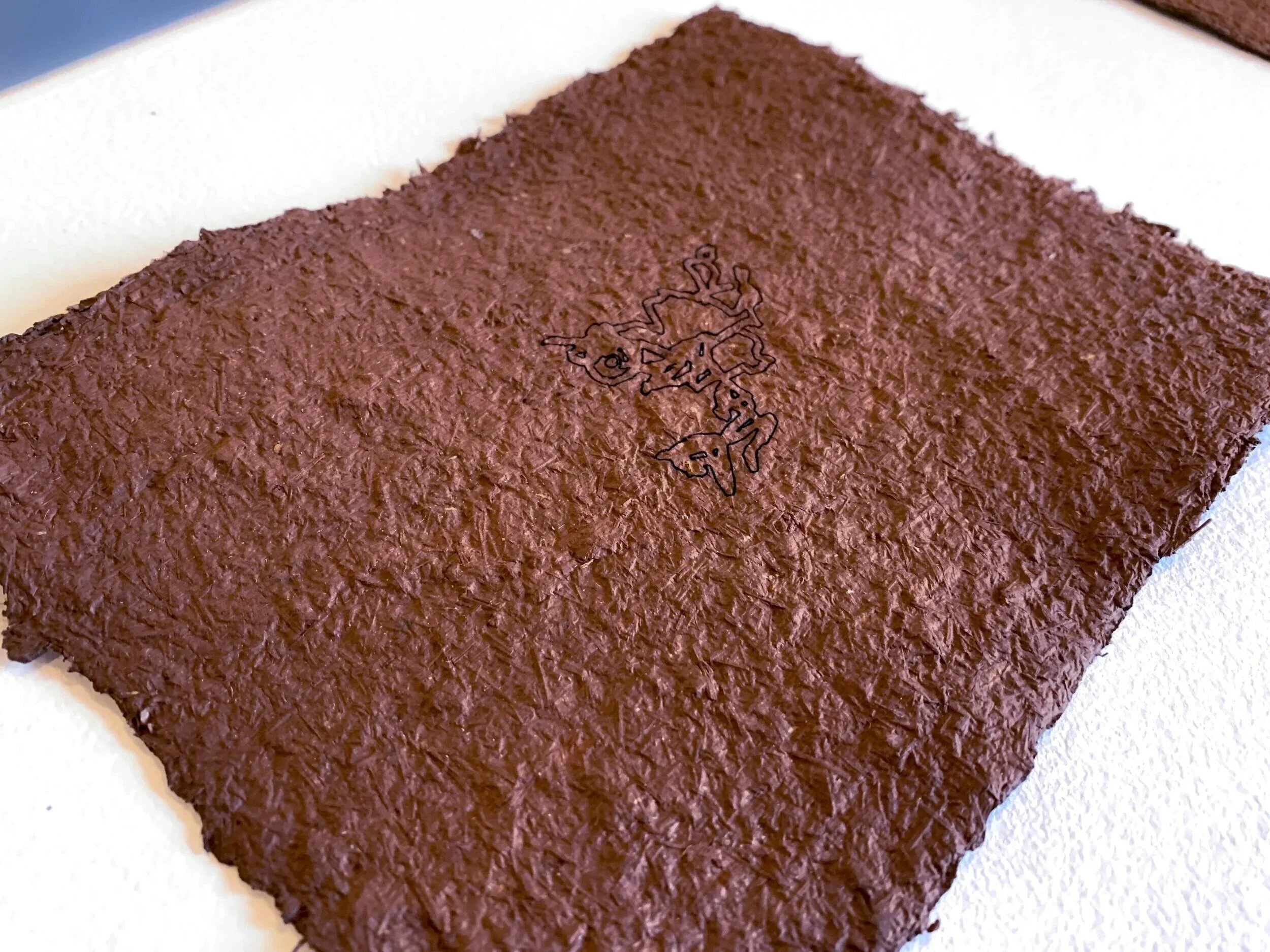
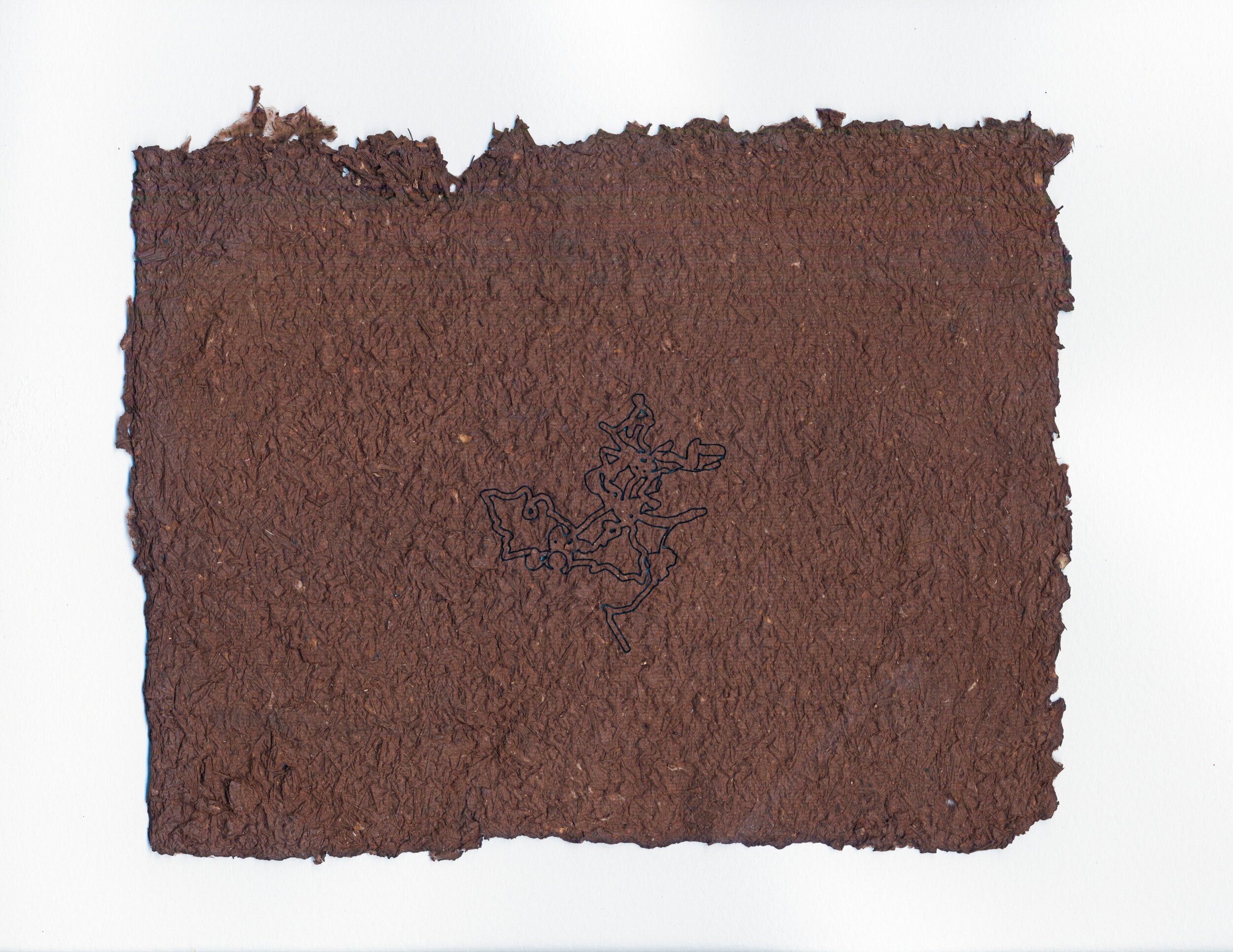


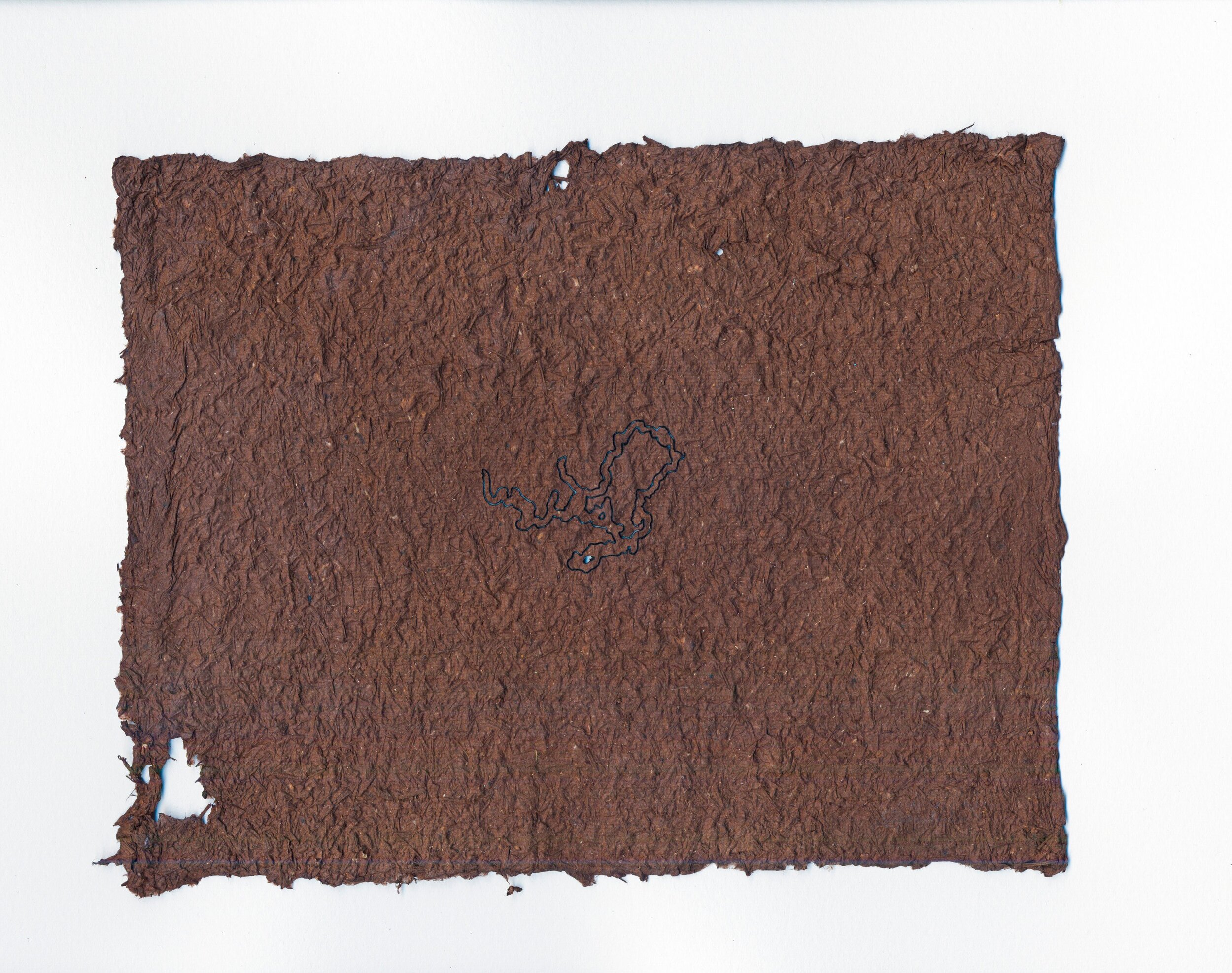
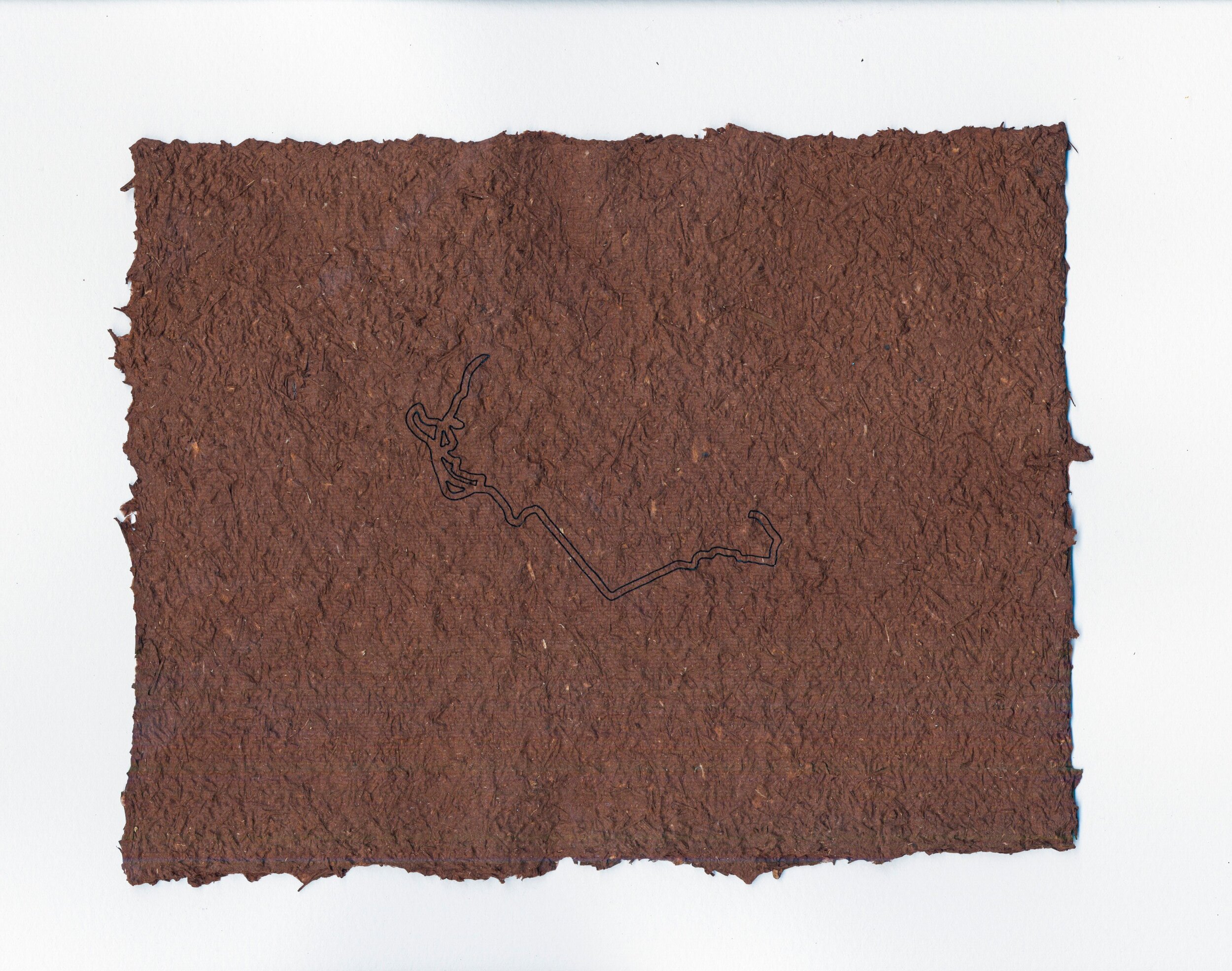
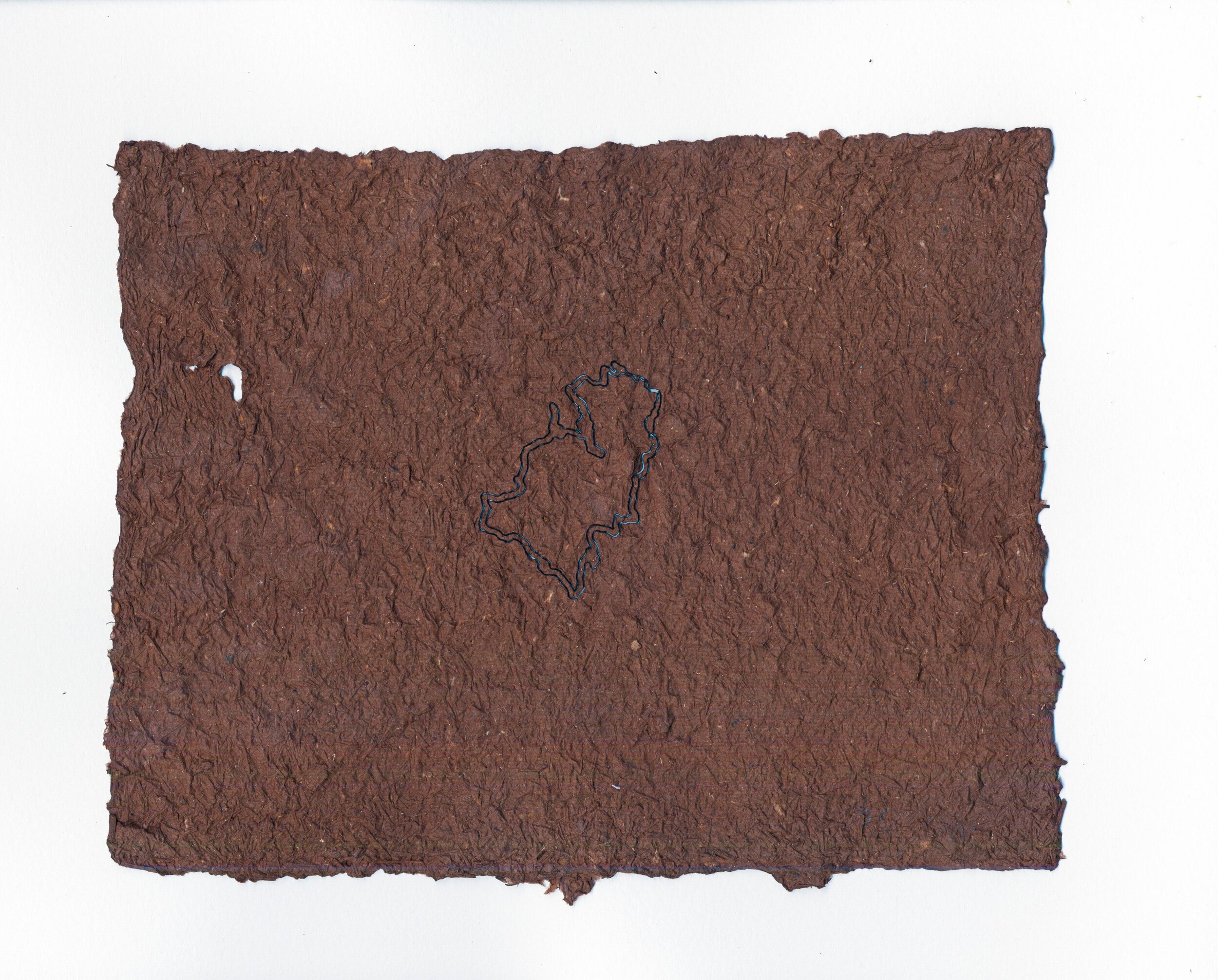
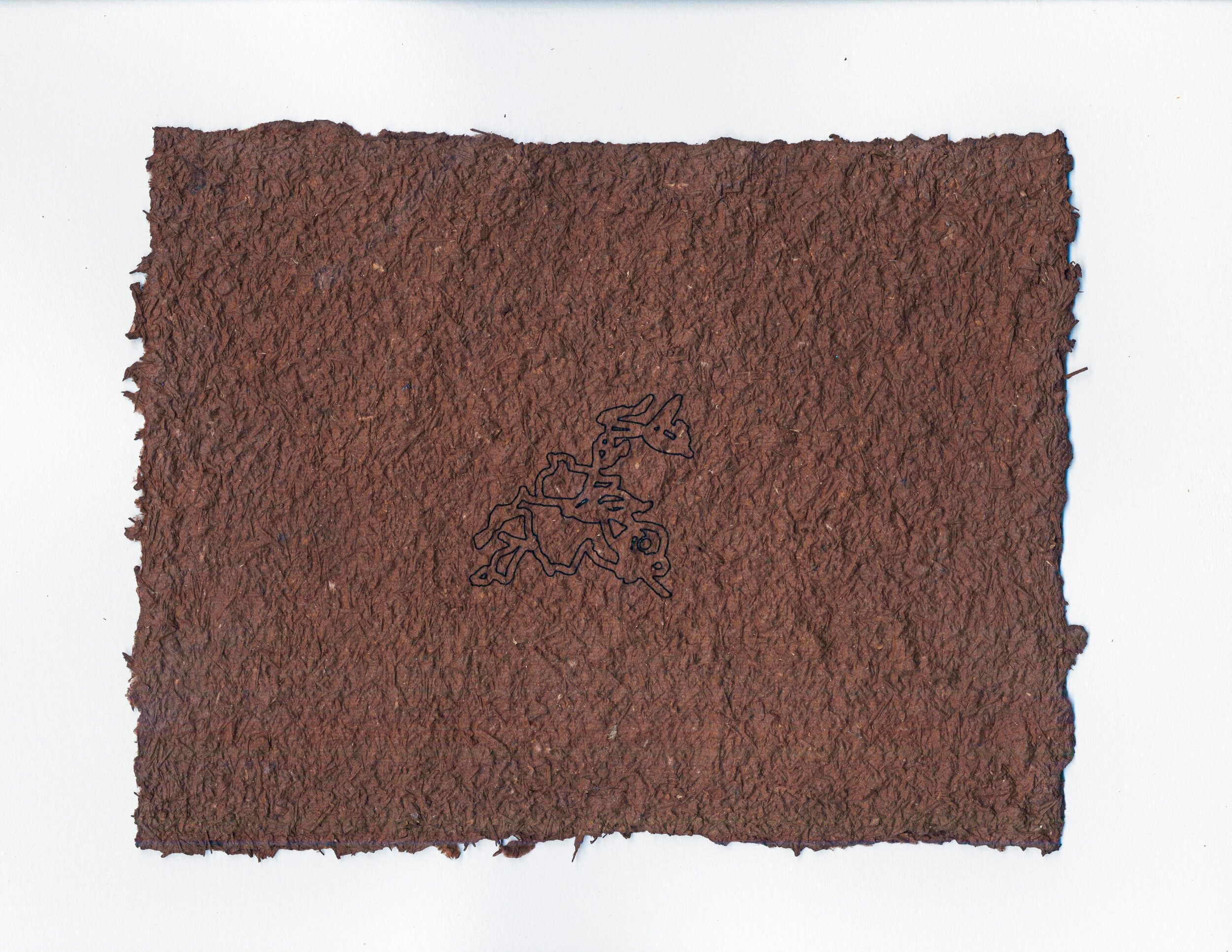
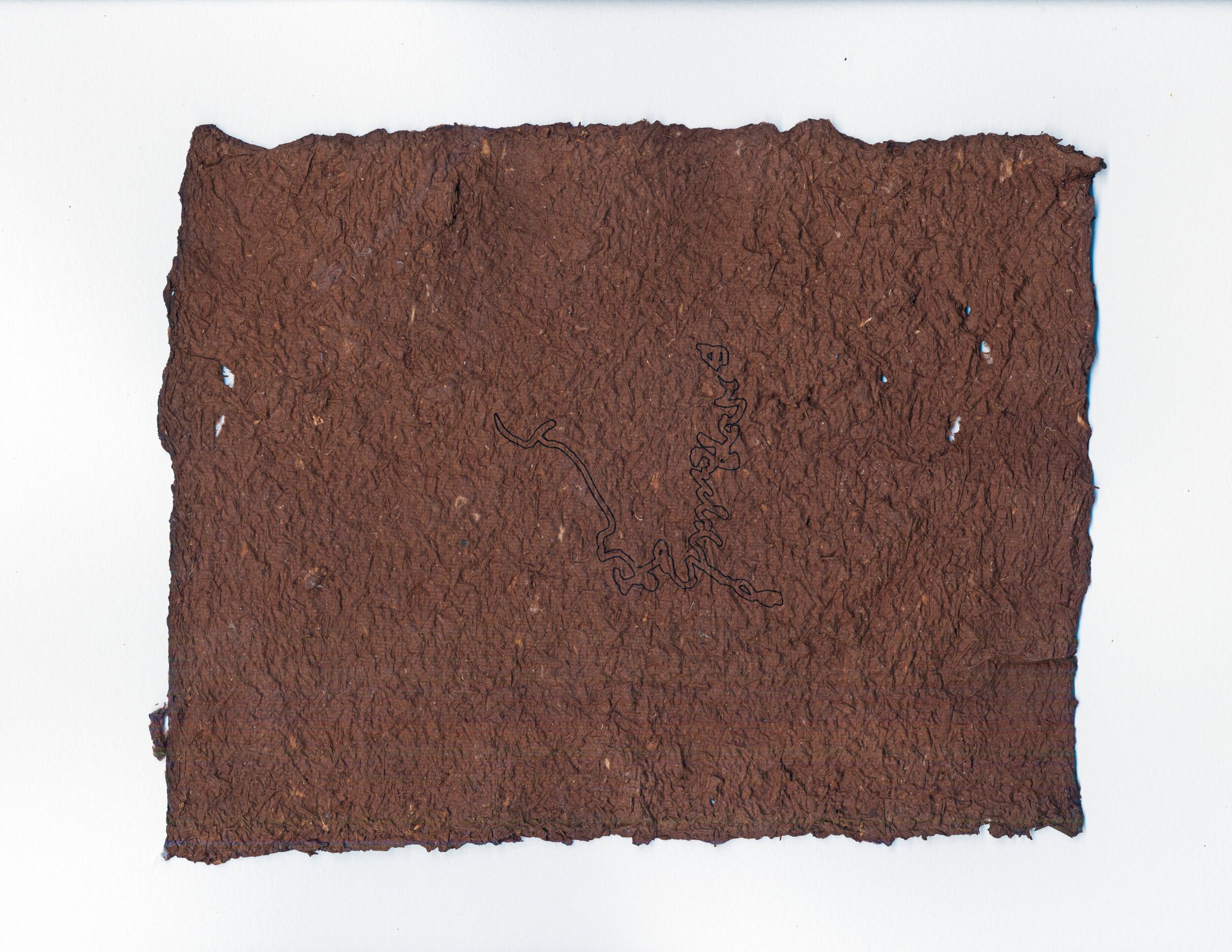
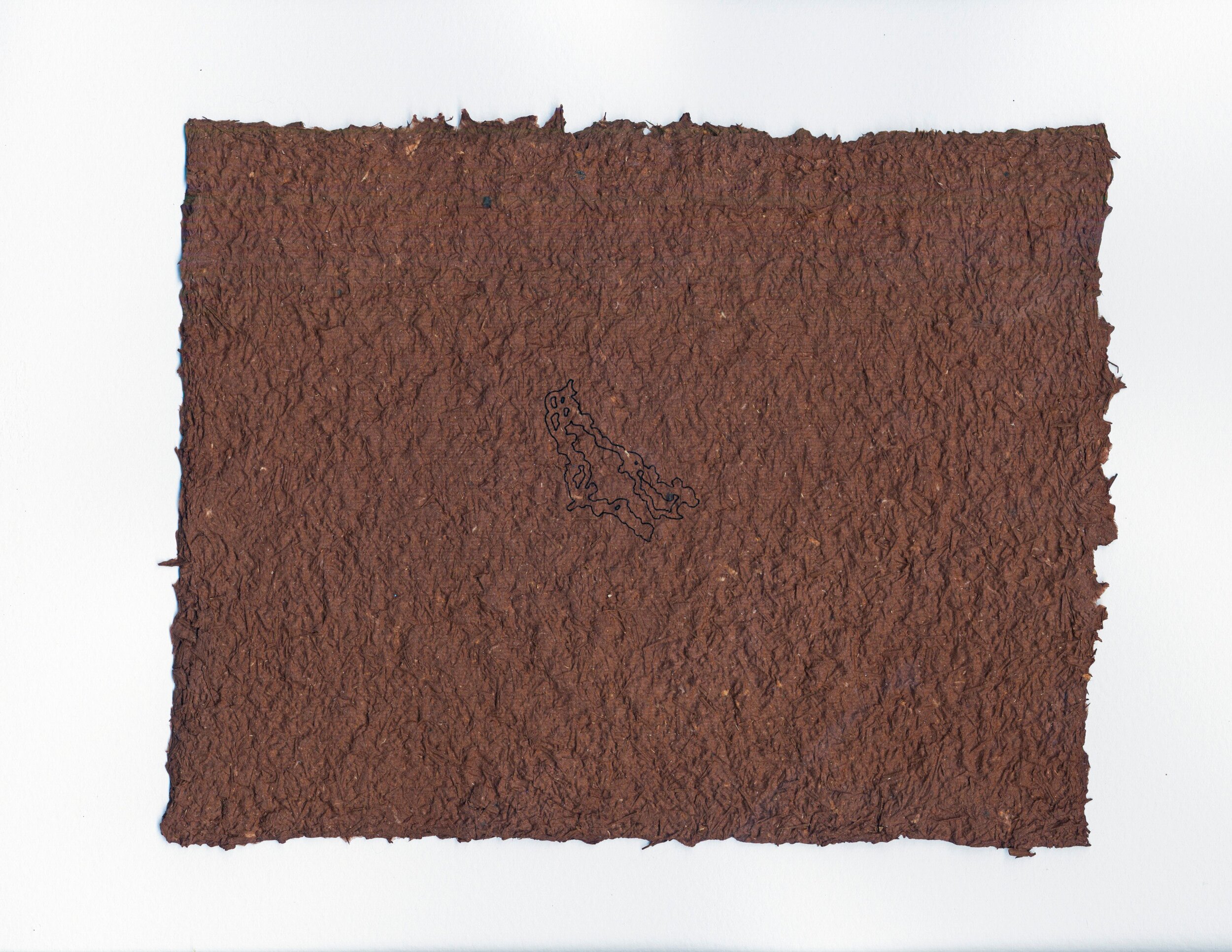
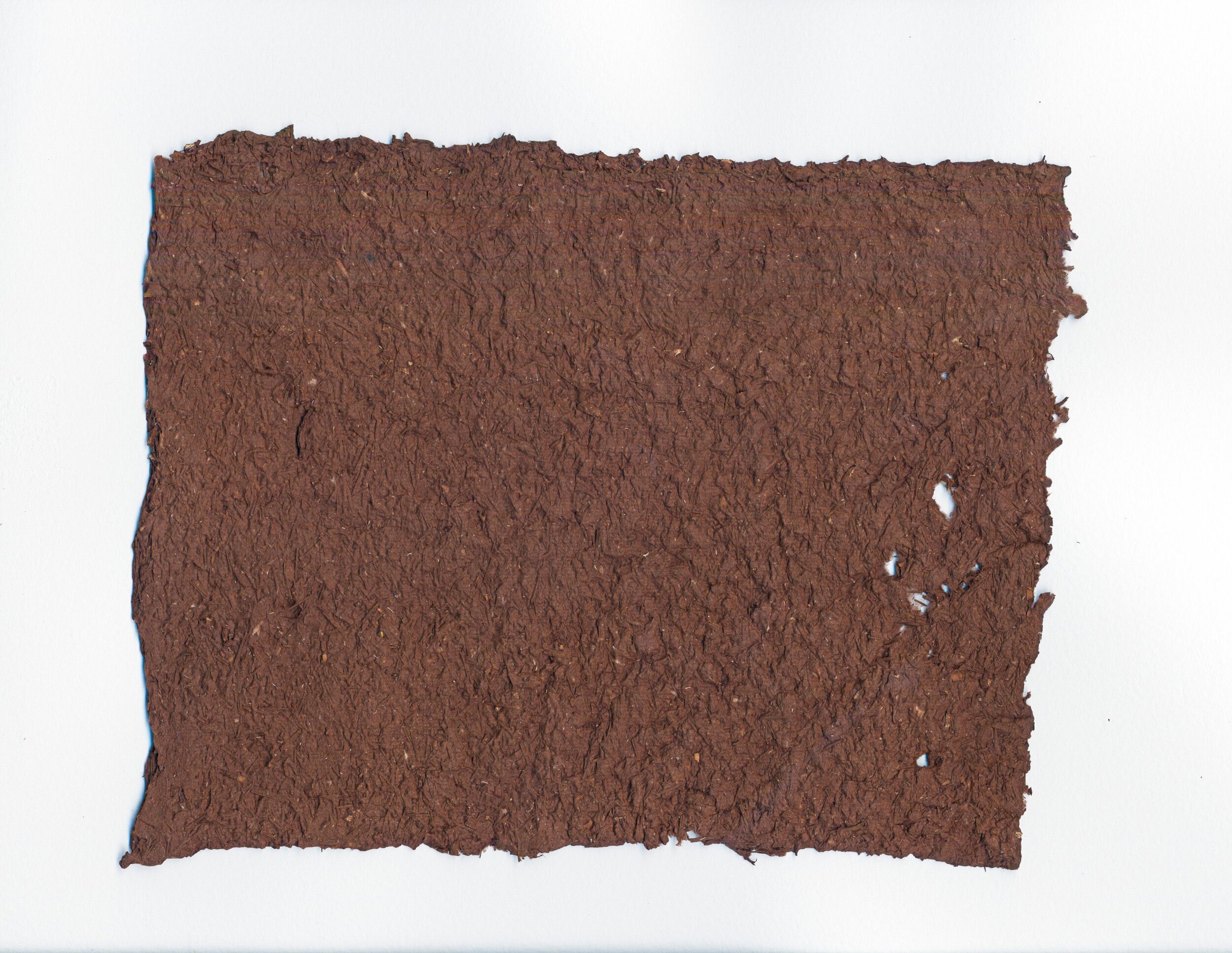
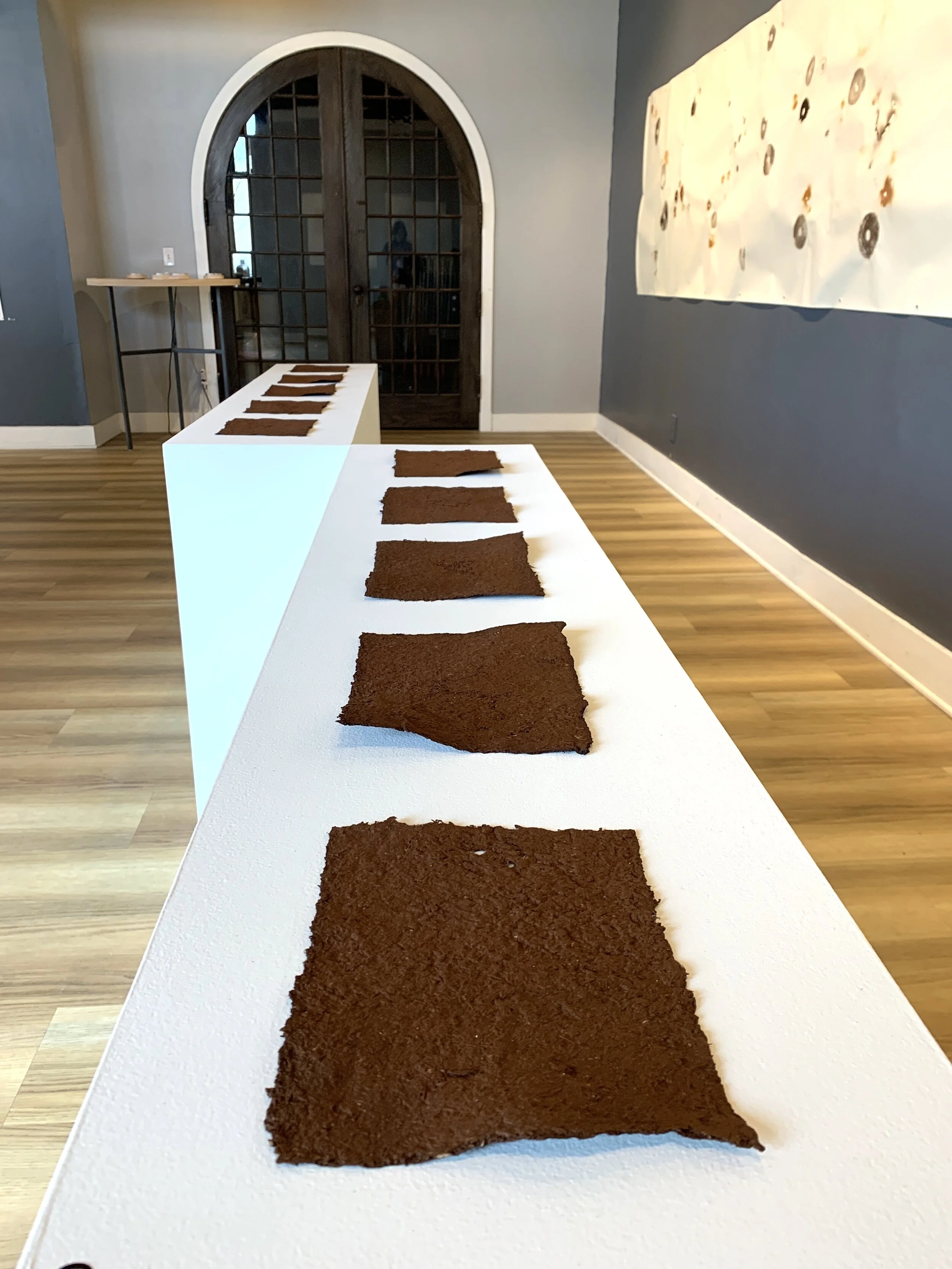
Deconstructed Book, Laser-etched hand-made mushroom paper with GPS trails (10 pages), 6”x8”
This project documents a season-long field investigation of saprophytic fungi in Letchworth Woods and the University at Buffalo campus. Through repeated walking, cycling, sustainable harvesting, spore printing, and mushroom-based papermaking, the work examines fungal life cycles, weather dependency, and decomposition processes. The project uses fungi as both material and method, mapping human movement and attention alongside the invisible mycelial networks shaping the forest ecosystem.
During the fall of 2019, I spent nearly every other day cycling across the North Campus of the University at Buffalo and tracing looping paths through Letchworth Woods in search of specific mushroom species. The forest floor—dense with decaying organic matter—formed an ideal environment for saprophytic fungi, organisms essential to decomposition and soil regeneration. Over the course of the season, I logged close to 100 miles within a relatively small area, repeatedly circling the same terrain. Despite this sustained attention, my harvest remained unexpectedly sparse; some days yielded almost nothing. It was an unusually dry fall, and my daily movements became closely attuned to weather patterns and the University’s lawn-mowing schedules, both of which directly shaped fungal growth.
My intention was to sustainably harvest local species, collect and store their spores for future propagation, and dry select specimens to create paper for a subsequent research project. Central to this work was nature’s own printmaking process: the spore print. Each mushroom holds the potential to produce multiple impressions, leaving behind delicate, particulate traces of its reproductive life. As the season transitioned from late-summer abundance into the first frost and eventual dormancy, I developed a deep, embodied connection to the woods.
Over time, I felt less like an observer and more like a participant within the ecosystem, moving in seemingly aimless patterns in search of sustenance. I learned to move quietly, to slow my pace, and to train my vision to recognize subtle signs of fungal presence. Through this repeated wandering, my movements began to resemble large-scale drawings—my own ephemeral network layered atop the vast, unseen mycelial systems threading through the long-decaying forest. The work became a record of attention, patience, and coexistence, mapping human movement against fungal time.